Do I need automation, or is my process the actual problem?
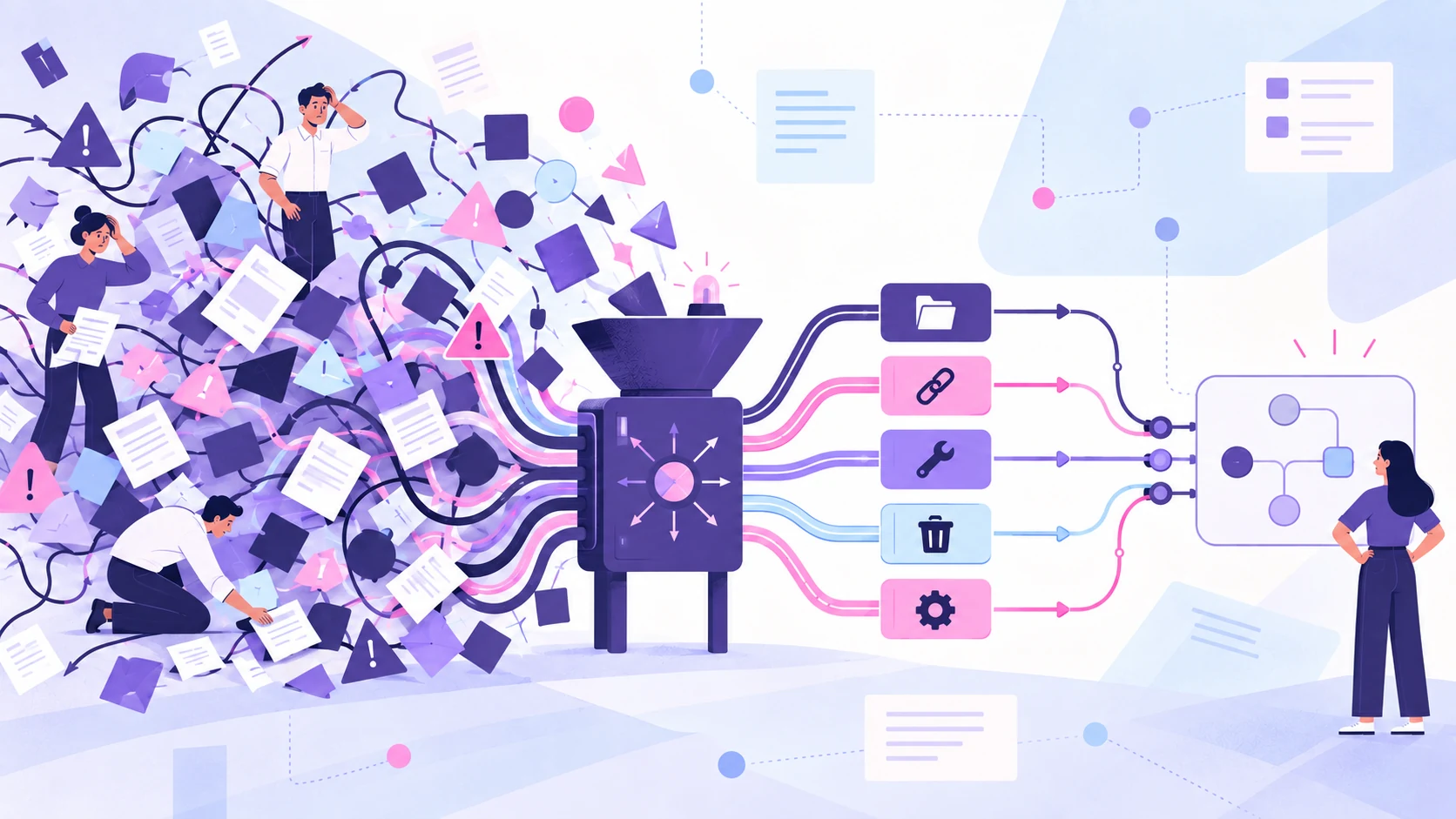
Automation helps when a task is repetitive and rule-based. If responsibilities, inputs or exceptions are unclear, fix the process first or the automation will reproduce the confusion faster.
You probably need to fix the process before automating it if staff use different workarounds, responsibilities are unclear or the steps change depending on who performs them. Automation works best when the task is repetitive, predictable and based on rules people can explain. If nobody agrees on what should happen, software cannot make that disagreement disappear.
What does a process problem look like?
A process problem usually shows up as inconsistency. Two people complete the same job differently. Information arrives in several formats. Nobody is certain who owns the next step. A task sits untouched until somebody remembers it. Exceptions are handled through private messages, memory or whatever seemed sensible at the time.
Automating that process can make the confusion faster and less visible. The workflow may now move information automatically, but it still sends the wrong input to the wrong place or leaves unusual cases with nowhere to go. A green tick in an automation platform does not prove that the business outcome was correct. It only proves that the configured steps ran.
What does a good automation candidate look like?
An automation problem looks different. The process is understood and people broadly follow it, but the same mechanical work keeps returning. Someone creates the same record in two systems, renames files, sends standard confirmations, checks for missing fields or copies an approved value from one place to another. The judgement has already happened. What remains is repeatable administration.
That is a much better starting point because the rule can be stated plainly. For example: when an approved form contains all required information, create the client record and notify the responsible person. If a required field is missing, do not guess. Send the item to a person for review. The normal path and the exception path are both clear.
What should you fix before automating?
Before building anything, remove steps that no longer have a purpose. Confirm which system should hold the main record. Decide who owns each human decision. Agree on the minimum information needed at each handoff. Test the process with a normal example, an incomplete example and a genuinely odd example.
This does not require months of process theatre or a flowchart the size of a dining table. It requires enough clarity that another person could follow the job without relying on private knowledge. A useful workflow map shows the trigger, the steps, the decisions, the systems involved, the owner of each handoff and what happens when the usual path breaks.
When is it reasonable to automate first?
There are situations where automating first is reasonable. A very small, low-risk task may already be perfectly clear. If the same approved attachment is always saved to the same place and named using the same rule, there may be little to redesign. Build the small automation, monitor it and keep the scope contained.
There are also situations where automation is not worth it. A task that happens twice a year, changes every time and takes ten minutes may be annoying without being a sensible build. The maintenance and monitoring would cost more attention than the task itself. Simplifying the instructions may be enough.
How do you decide between process work and automation?
Use four questions to decide what you are dealing with. Can people describe the current steps the same way? Are the inputs consistent enough to act on? Can the decisions be written as clear rules? Is the task frequent or costly enough to justify building and maintaining something?
If the answers are mostly no, fix the process. If the answers are yes and the remaining work is repetitive, automation may be useful. If the task still needs judgement, automate the preparation and handoffs while leaving the actual decision with a person. The aim is not to automate everything. It is to make the work easier to follow and harder to drop.
Related services and examples
Review the process before building
Find out what is breaking down and which change would actually help.
Automate the rule-based part
See how repeated work can be handled while exceptions return to a person.
Keep the real decision human
A workflow example where software prepares the information without making the judgement.
GOT ONE LIKE THIS?
Got a workflow doing something similar?
Show me what’s happening and I’ll tell you where I’d start.